
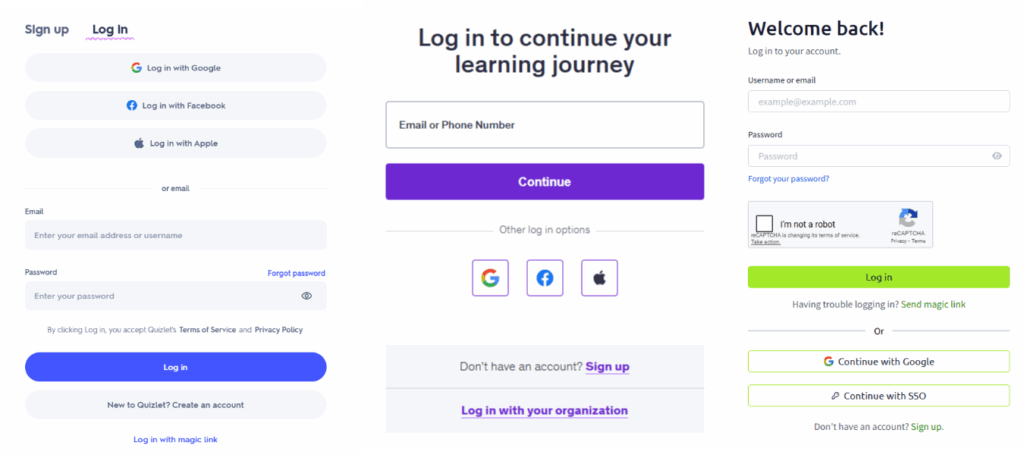
Two of the most useful identity management technologies available today are Identity Federation and Single Sign-On (SSO). If your business conducts most of its operations online using a wide variety of websites, applications, and cloud services, these technologies can significantly simplify user access management. Both federation and SSO allow users to access multiple resources using a single set of credentials that are centrally managed by an Identity Provider (IdP). For example, employees could use their Google account credentials to access accounting software, project management platforms, and virtual meeting applications.
There are some important differences between federation and SSO that should be understood. Identity federation allows users to access resources hosted by different organizations while using their existing company credentials. This is accomplished through the establishment of trust relationships between organizations.
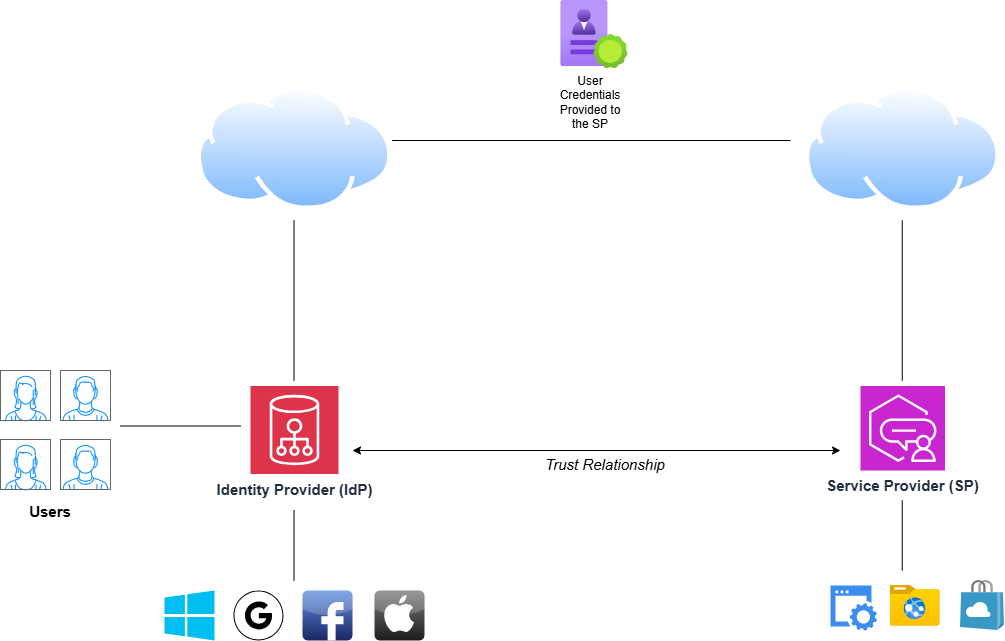
An organization hosts its user accounts on an Identity Provider (IdP). Common IdPs include Microsoft, Google, Facebook, and Apple ID. More business-focused identity providers include Okta, Auth0, and Active Directory Federation Services (AD FS). User account administration is performed through the IdP, including password management, multi-factor authentication (MFA), account provisioning, and access control configuration.
The website, application, or cloud platform that users wish to access is known as the Service Provider (SP). The term is fairly straightforward—it refers to the external organization hosting the resource that users want to access. For federation to function properly, the Service Provider must establish a trust relationship with the organization's Identity Provider.
How exactly is identity information transmitted between the IdP and the SP? Several industry-standard protocols have been developed specifically to support federated identity management:
SAML 2.0:
Security Assertion Markup Language (SAML) is one of the oldest and most widely adopted federation protocols. SAML uses XML-based assertions to communicate authentication and authorization information between an IdP and an SP. When a user successfully authenticates to the IdP, a digitally signed SAML assertion containing identity attributes is sent to the Service Provider, allowing the user to access the requested resource.
OAuth 2.0:
OAuth is primarily an authorization framework rather than an authentication protocol. Instead of sharing user credentials with the Service Provider, OAuth allows a user to grant an application limited access to protected resources. After the user authenticates with the Identity Provider, an authorization server issues tokens that can be used to access specific resources without exposing the user's credentials.
OpenID Connect (OIDC):
OpenID Connect extends OAuth 2.0 by adding authentication capabilities. In an OIDC implementation, the user authenticates with the Identity Provider and receives an ID Token that verifies their identity, along with an Access Token used to access resources. The Service Provider validates the ID Token before granting access to the requested service.
Now that you understand the fundamentals of identity federation, you may be wondering how Single Sign-On differs. While federation establishes trust relationships that allow identities to be shared across organizational boundaries, SSO is the user experience that enables a user to authenticate once and access multiple resources without repeatedly entering credentials.
For example, an employee may log in to a company portal and immediately gain access to their timekeeping system, email account, collaboration platform, and other authorized applications. SSO can be implemented within a single organization or across multiple organizations through federated identity relationships. In many environments, federation serves as the underlying mechanism that enables SSO functionality.
As you can see, implementing federation and SSO can provide significant benefits to an organization. Employees no longer need to remember separate usernames and passwords for every application they use, improving both convenience and productivity. From a security perspective, centralized identity management can reduce password fatigue, improve access control, and limit the proliferation of unmanaged accounts that contribute to shadow IT.
However, federation and SSO also introduce certain risks. Although federation protocols are designed with strong security controls, attackers may still attempt to hijack sessions, steal authentication tokens, or exploit implementation weaknesses. In addition, relying on a single set of credentials creates a potential single point of failure. If an attacker successfully compromises a user's primary account, they may gain access to multiple organizational resources.
For this reason, organizations should enforce strong authentication controls such as multi-factor authentication, conditional access policies, and robust password standards. Equally important is ongoing security awareness training to educate employees about phishing, credential theft, social engineering, and other threats that could compromise their accounts.