
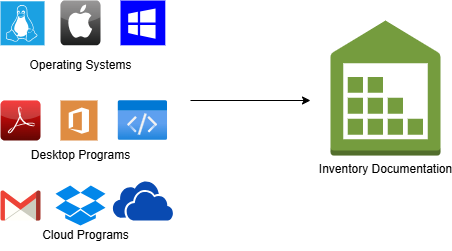
Hardware is only part of the full equation when it comes to technology. A large range of software applications are used in business environments, from operating systems to accounting software to AI tools. Most organizations use a mix of open-source and proprietary software from a wide range of vendors. Over time, issues arise if a business does not manage its software infrastructure properly. Implementing a software asset inventory allows business management to keep track of software age, version information, and licensing information, as a few benefits.
Many proprietary asset inventory programs contain both hardware and software inventory capabilities. If a business is looking to purchase a proprietary asset inventory solution, it should pre-specify whether or not the program includes functionality for both hardware and software assets. By doing this, the business avoids committing itself to buying two separate solutions for two separate tasks. If a company wants to opt for the spreadsheet solution, we have provided a free template for use.
Making a software asset inventory often requires more data to be retrieved than in a hardware inventory. A business should be sure to document the software name and manufacturer, version, license type (proprietary, open source), price, usage level (high, low), number of instances deployed, and purpose in the business. Like the hardware asset inventory, the software inventory should be reviewed regularly and updated as different software is implemented and retired.