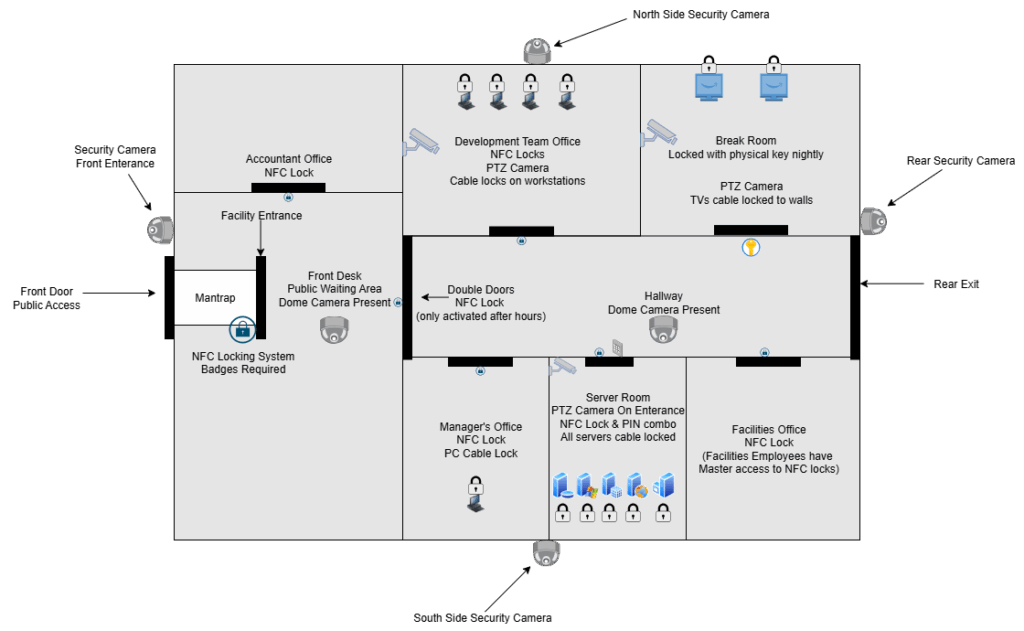
Physical cybersecurity may sound like an oxymoron, but it is an essential part of a stable cybersecurity program. Physical security ensures that your facilities have multiple layers of protection in place to mitigate and prevent unauthorized intrusion that can result in theft and damage to internal infrastructure.
There’s a good chance that your business already has several maps of its physical layout for things like fire exits, plumbing, and electricity. A physical cybersecurity map follows the same idea as those, only with cybersecurity-relevant controls highlighted.
To create a physical site map, you can utilize any diagramming software you like. The map can also be as basic and as detailed as you want, but it should, at a minimum, identify devices and locations by name.
A physical security diagram should note the presence of any of the following:
- Locking systems, whether they be digital or physical locks
- Presence of any other systems for Authentication and Authorization
- Presence of security cameras
- Door controls, such as a man-trap or a request to enter the system
- Every entrance and exit to the building
- Cable locks on machines
- Any special schedules for the locking of specific entrances
After completing a physical site map, make sure you store it in a secure location, preferably storing both a digital copy and a physical copy.