Artificial Intelligence has already begun to change the functionality of the modern workplace, both in positive and negative ways. Cybersecurity is one such area where AI shows great promise and, at the same time, creates new fears. Most small businesses have access to at least one AI platform with options including ChatGPT, Gemini, and Copilot. These tools can help assist you and your employees in seeking to understand certain cybersecurity-related issues.
Analyzing Phishing Emails
Phishing emails can become more and more sophisticated and harder to detect. Ironically, a lot of that has to do with AI tools helping threat actors make phishing messages cleaner, more concise, and more convincing. AI can play both sides, however. If your organization receives messages that are hard to decode as phishing, you may be able to use AI tools to help analyze them.
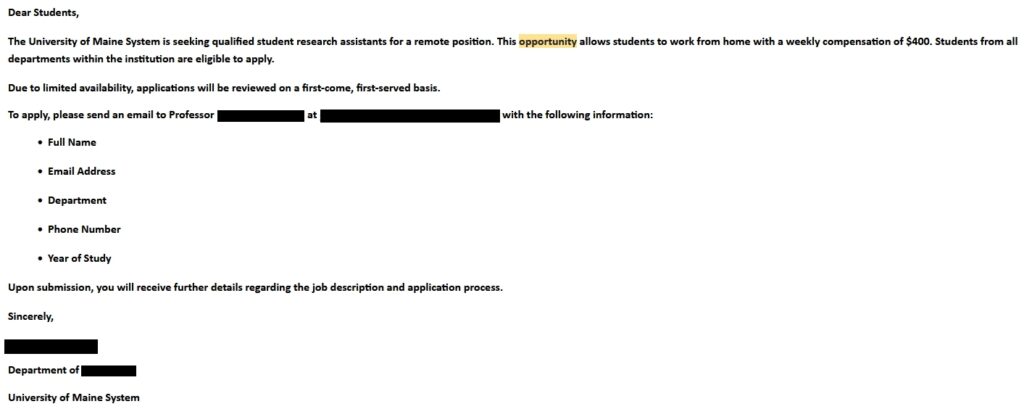
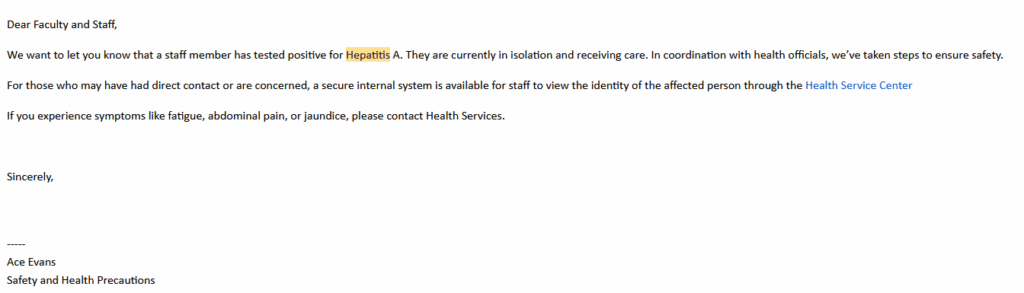
If you download the suspect emails and ask a tool to tell you if they contain evidence of phishing, you may get insights you overlooked previously. For example, I downloaded two emails that were received in my school mailbox and asked ChatGPT and Copilot for their consensus.
Email 1:
ChatGPT Analysis:
 Loading...

 Reload document
  Open in new tab
 Email 2:
ChatGPT Analysis:
Loading...
Impressive. Both emails were fraudulent. ChatGPT did a great job at explaining all the red flags that were tripped by the emails. On the other hand, Microsoft Copilot did not note the email as fraudulent and only listed a few red flags it detected.
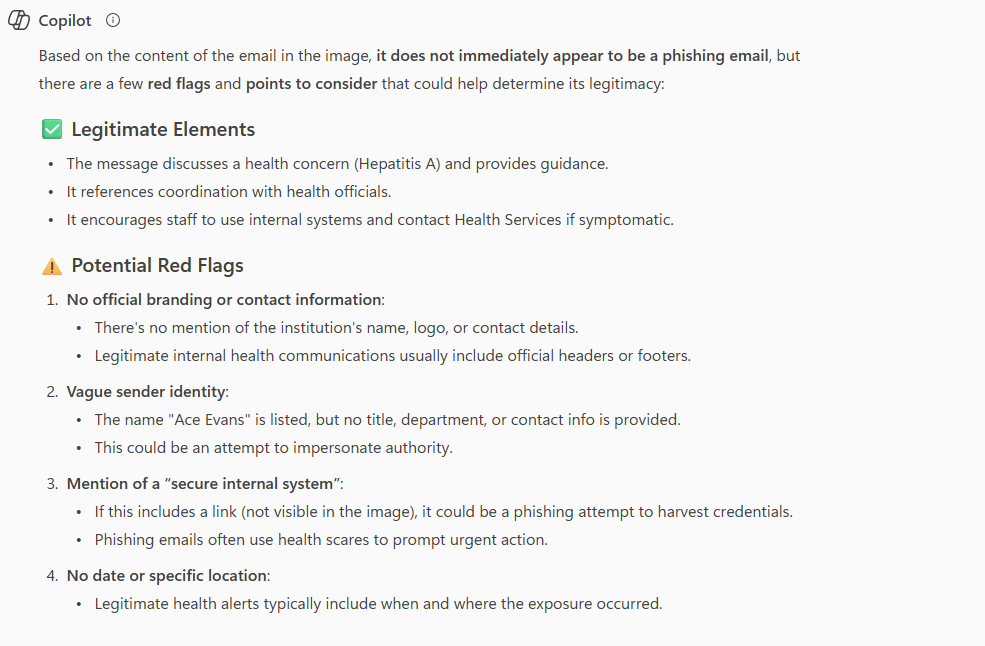
It all comes down to the tool you are using. This is why you should always try a range of tools if you are using AI to help weed out phishing attempts.
AI may not always get it right, so it is up to you and your employees to be responsible and not take everything the tools say to heart.
Writing Warning Emails to Staff Regarding Phishing Attempts Within the Organization
After analyzing both of the previous emails, ChatGPT offered to write a warning email to be distributed to all staff within the organization. This is a task that is ripe for automation if the AI tools correctly identify phishing attempts.
Warning 1:
Loading...
Warning 2:
Loading...
Help With Anti-Malware Scans
Antimalware programs often give users the option to download a transcript of their scans to document what went wrong and where. Artificial Intelligence can ingest these often complex transcripts and break down what was discovered for you. These results can help you pinpoint program names, IP addresses, registry keys, etc.
For demonstration, I asked ChatGPT to analyze two Malwarebytes scan reports I collected. I asked it to then break down where my host machines appear to be lacking on the security front.
Loading...
The insights from this report can then be brought up to the cybersecurity team in your organization and help guide you towards embracing corrective controls.